

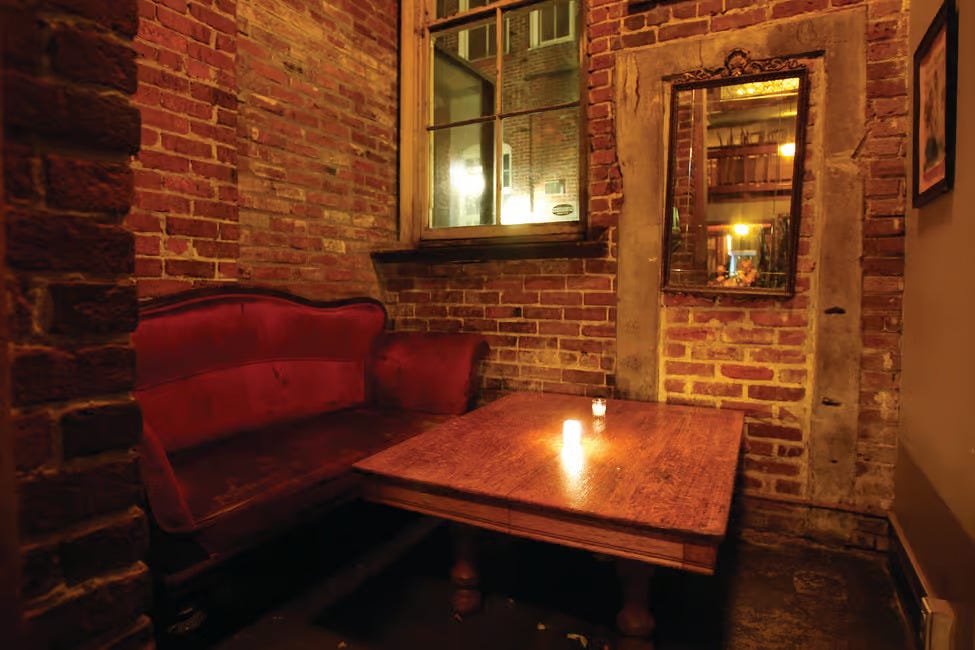
One evening, she decided to visit a coffee shop in the historic Old Town area because she noticed someone had glued a small copy of Liber OZ to the doorjam. It was located inside one of the Shanghai tunnels, a group of passages in Portland, where Chinatown used to be. It was connected to the central business section. Today, the tunnels connect the basements of many hotels and taverns to the waterfront of the Willamette River. They were built to move goods from the ships docked on the Willamette to the basement storage areas, allowing businesses to avoid streetcar and train traffic on the streets when delivering their goods. Now, they had a place to meet outside the all-seeing eye of the regime.
This is the place where people spoke in whispers and tried to figure out how to outsmart the oppressor. They gathered a small band of teachers, tech-geeks, hackers, laborers, disbanded soldiers, and exiles. Consequently, this meant that the place was swarming with undercover agents, snitches, and bootlickers looking to have their heads petted like dogs. There wasn’t a shortage of those. The fear tactics were working, and people with an “if you can’t beat them, join them” attitude couldn’t pass up the $50,000 sign-on bonus. They figured no one would ever find out; they could cover up their faces to hide their shame.
To say it was a business in any sense is being polite. It was more like a damp cellar beneath an abandoned bakery serving cheap, watered-down coffee in unwashed mugs.
It was here that she literally bumped into Thomas, causing him to spill his coffee all over his shirt, which, to be honest, wasn’t that clean to begin with. She thought he probably smelled better with the coffee spill than he had before.
“God damn it!“ He cursed.
“Pardon me, Sir. My apologies. Can I buy you another cup?“
He nodded, and she disappeared into the cigarette smoke to the counter.
Tomas Mars, a 42-year-old former railway yard foreman, was a victim of the regime. His union was broken apart by decree. His boss handed him a red hat and instructed him to swear loyalty to the new order. He refused. By morning, he was blacklisted, stripped of work. He found others like him wandering the alleys of the industrial quarter, empty faces but fists tightly clenched. He told Kaylah about his troubles, and his loyalty to fellow workers is unflinchingly and unquestionably steadfast. He believes the breaking of the union was not just a political but also a spiritual event that shattered solidarity.
Since he finally found someone to listen to him, he began to confide in Kayla. Maybe it was her demeanor. She could make anyone feel safe.
Next: The Railman