

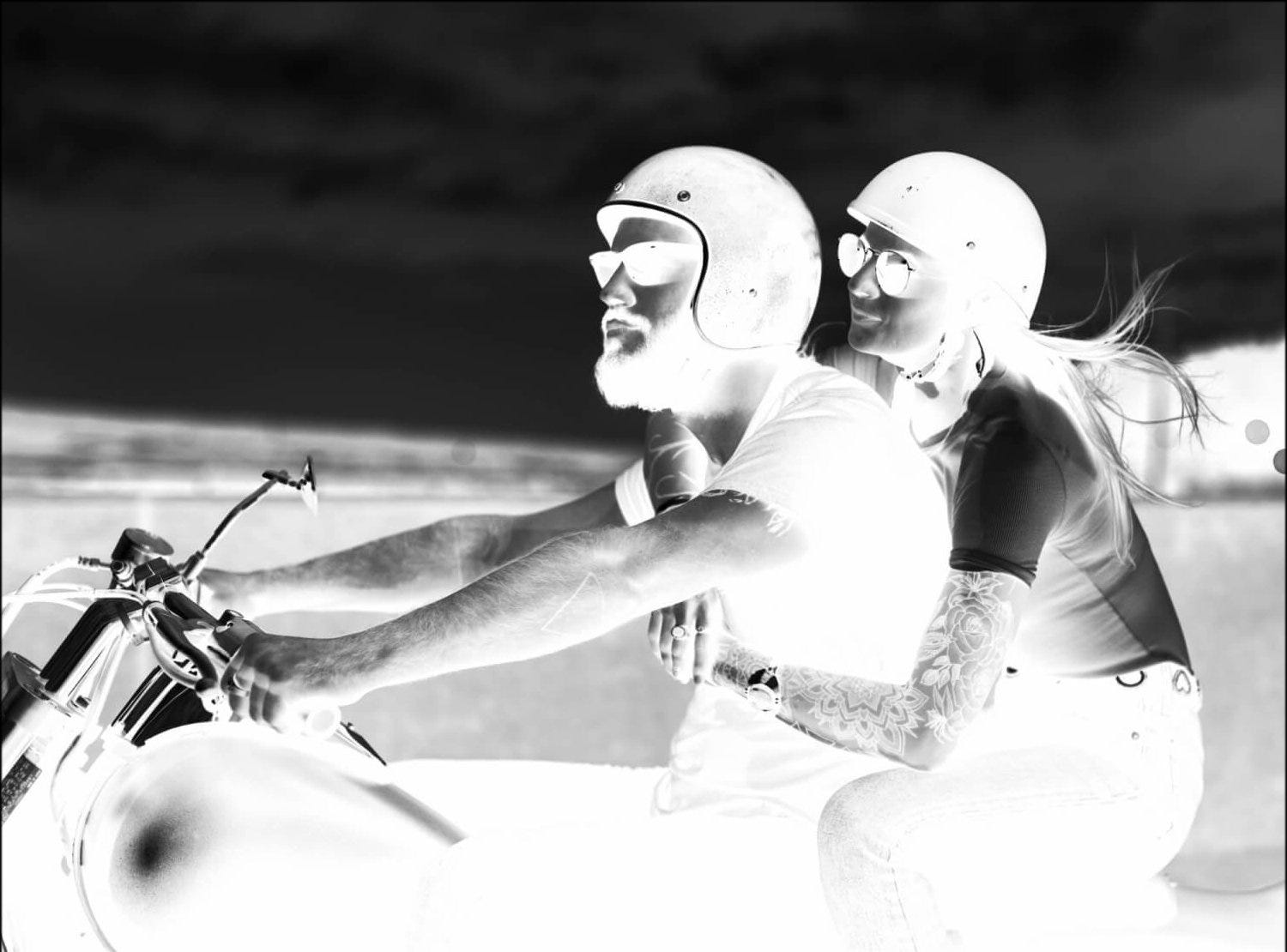
I was twenty when I was first married. One day, we drove out to visit her father in the Palmdale/Lancaster stretch of desert. I made the trip on my so-called “rice burner,” a KH400 triple-cylinder two-stroke. It wasn’t fast. It wasn’t powerful. And it certainly wasn’t American. But it was mine. At that stage of my life, that felt like enough.
Out of pure, unfiltered stupidity, I ran out of gas on the freeway.
One minute we were humming along through the desert heat; the next, we were coasting toward the shoulder while traffic thundered past. Big rigs blasted by close enough to rattle our bones and tug at our balance. The wind they kicked up felt like it might peel us off the asphalt. I stood there with my helmet in my hand, scratching my head, doing mental math I should have done miles earlier, trying to decide just how bad this was about to get.
Then I heard them.
Engines. Not one. Several. Deep, unmistakable V-twin thunder.
About eight bikers rolled in behind us on Harleys.
Back then, encounters like that felt like a coin toss. You either got mocked mercilessly for riding a Japanese motorcycle… or you got helped, usually after being mocked mercilessly for riding a Japanese motorcycle. Sometimes both. Television and movies had done a masterful job of convincing the public that bikers were outlaws, psychos, or some hybrid of the two. Leather, patches, beards, scowls, all Hollywood shorthand for danger.
My wife was terrified.
As they cut their engines and climbed off their bikes, she leaned close and whispered (dead serious) that if something went wrong, I should push her down the embankment so she could run. She was young, sheltered, raised on stories where men who looked like this were villains. I still don’t know whether she fully meant it or was just overwhelmed, but the fear in her voice was real. Her hands were shaking. Being very familiar with biker culture at that point in my life, I told her to take it easy.
The lead rider walked over. Big guy. Leather vest. Sun-creased face. He asked what was wrong.
I told him the truth. Aside from being underpowered, requiring a temperamental fuel-oil mix, and having the audacity to be Japanese, it was fine. I had simply run out of gas.
He didn’t laugh. Didn’t smirk. Didn’t deliver the speech I half expected.
He just nodded.
Without a word, he turned and motioned to one of the others. A minute later, they were pulling the tank off one of the Harleys. Someone produced a container. They siphoned out about half a gallon and poured it into my bike like it was the most routine thing in the world.
They helped me get it started. Then, instead of riding off, they formed up around us and escorted us to the next gas station, a loose protective buffer between us and the chaos of freeway traffic. Big rigs gave that formation space. Nobody crowded us. We arrived intact.
When I tried to hand them money, they waved it off. No payment. No trade. No expectation. Just a nod, a “You’re good,” and the roar of engines as they disappeared back into the desert.
That moment lodged itself somewhere deep.
It shattered a myth my wife had been carrying, one fed to her by television, movies, and the quiet machinery of fear. The caricature dissolved right there on the shoulder of the freeway. These weren’t monsters. They weren’t threats. They were men who saw someone stranded and did what needed to be done.
Sometimes kindness shows up wearing the exact face you’ve been taught to distrust. Sometimes the roughest-looking people are the first to stop. And sometimes you run out of gas just so you can learn what’s real.