

First, the bad news.
If you’re expecting some kind of cinematic experience from enlightenment, you might be disappointed.
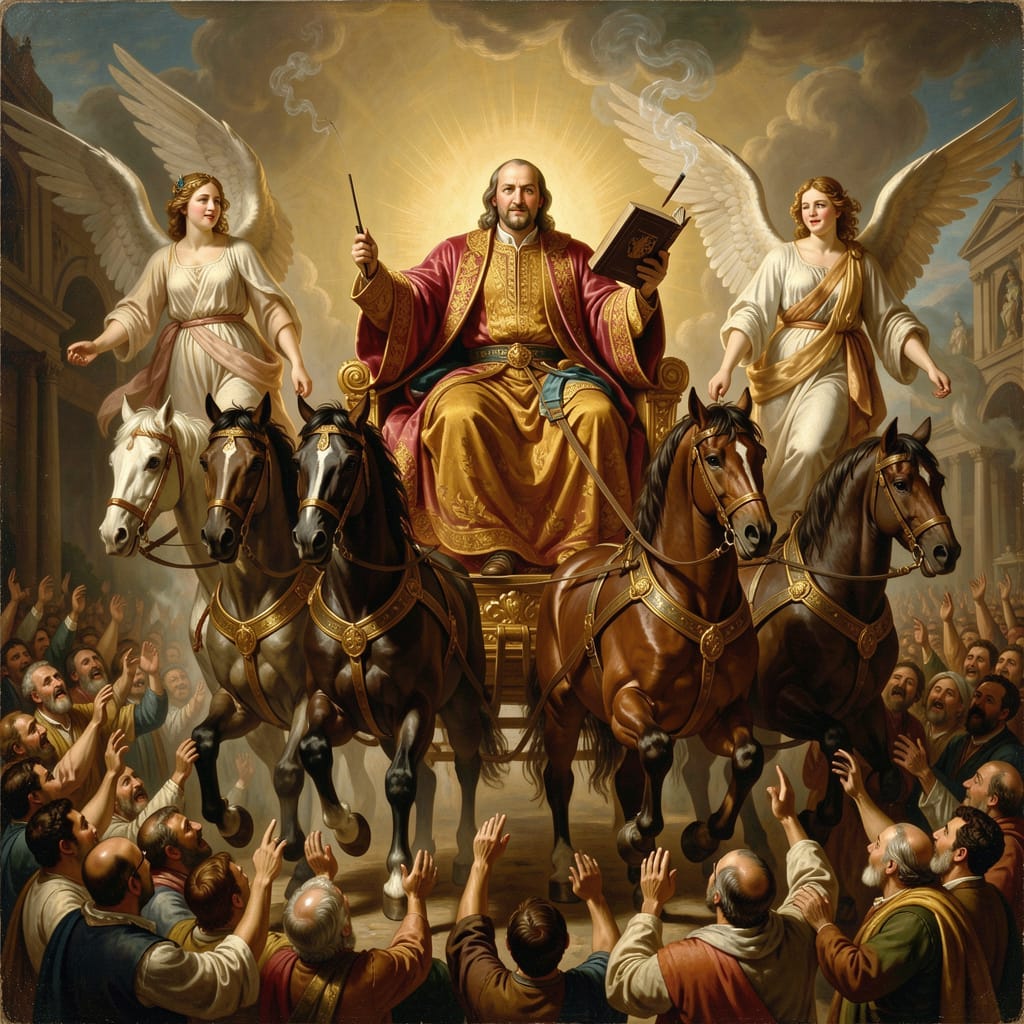
The hand of God won’t descend from a beam of sunlight filtering through the parting clouds. You will not ascend into some kind of cosmic space preserved for the enlightened few. Angels won’t sing, and they won’t blow trumpets. You won’t have superhuman strength, or be able to shoot spider webs from your hands, or leap tall buildings. You won’t levitate or become immortal. Life will go on with or without you. People won’t automatically assume you are interesting.
Nothing spectacular happens. It’s like that old saying, “before enlightenment, carry water, chop wood. After enlightenment, carry water, chop wood.”
What you did was to stop chasing and resisting reality. You finally quit trying to shape the world into some preconceived, impossible notion of how you or others think it should be. In its place, there’s a quiet honor. You realize you were pointed the wrong way. Now you realign.
That’s it.
No applause. No spiritual trophy or patches. No promotion to a higher class of human. If anything, there’s a dull sting of embarrassment… all that struggle, all that noise, and for what?
You don’t stop suffering. The world still needs changing, but now you know what is possible and what isn’t. It doesn’t feel profound as you’ve read. It feels plain. Almost bleak. It almost always leads to a dark night of the soul.
“Enlightenment” is a bloated word for something so small. When it’s real, it doesn’t crown you. It undresses you. And what remains isn’t special. It’s just honest.
So, why do The Work?
Suffering has become optional more often than it once was. While pain still occurs, the mental struggle that often accompanies it begins to fade. You stop resisting what nature brings. Life may still deal harsh blows, but it no longer has to escalate into a chaotic mental drama.
You get your mojo back. Fighting reality is exhausting. Defending an identity you don’t really believe in is exhausting. Trying to control how you’re perceived is exhausting. When that grip relaxes, there’s a quiet surplus of energy. Not manic energy, usable energy.
You will become less susceptible to manipulation. Advertising, outrage cycles, tribal politics, peer pressure, and status games all rely on exploiting your insecurities. When you’re less attached to the character you play, those hooks slide right off.
Your relationships become simpler. You argue less and feel less need to win. You listen more, and you don’t turn every debate into a reflection of your worth. Real love transforms from a negotiation with the universe into a present experience. You start to recognize love in everything, especially in yourself, as fear loses its dominant position. While fear may still communicate, it no longer controls your life. Your decisions shift from focusing on “How do I protect my image?” to “What is true?”
Ordinary moments no longer feel empty. When you stop chasing the next identity upgrade, simple things regain their significance: the trees, coffee, wind, silence. You don’t need to feel superior to feel alive, so you stop relying on others to give your life meaning. No guru, institution, ideology, or trend defines who you are. Instead, you find clarity as authority shifts inward, not in arrogance, but in understanding.
Death becomes less theatrical because when you’re less attached to the costume, the idea of removing it isn’t quite as terrifying. It doesn’t solve mortality; it softens its drama.
Enlightenment is appealing not because it makes you special, but because it frees you in small, accumulative ways. Not radiant, but unburdened.
And if the “bad news” is that nothing spectacular happens… the good news is that you no longer need it to.